The four-phase doré lifecycle.
ExCom takes title at origin and carries the metal — and the risk — through to LBMA fix. The lifecycle below is the doré-specific protocol; the same discipline is applied to the broader raw-material flows ExCom handles. Sourcing under FPA, insured logistics, assay-exchange refining, and liquidation against benchmark within a fourteen-day window.
Sourcing
Sourcing is conducted under Forward Purchase Agreements with producers — mine operators, collectors, and aggregators in origin regions. ExCom does not source on a spot basis from undocumented counterparties; relationships are paper-first, identity-and-origin verified, and limited at exposure thresholds set at the group level.
Risk transfers to ExCom at wheels-up — when the metal leaves origin under documented custody. Up to that point, the producer retains title; from that point, ExCom carries the metal on its balance sheet, with hedging applied against open exposure within the fix window.
Origin documentation captured at FPA execution survives the lot through every subsequent phase. Where origin documentation does not survive scrutiny, sourcing is not extended. The discipline is documentary, not editorial.

Logistics
Logistics moves doré from origin to refinery vault under insured high-value transport. Routing, carrier, and security tier are selected per lot, against pre-agreed protocols negotiated with insurers and refining counterparties before metal moves.
Custodial chain is documented from origin handover to vault-in confirmation. Customs clearance is handled with documentation aligned in advance to destination jurisdiction requirements. Vault-in confirmation is a hard gate before assay scheduling.
Insurance covers marine, aviation, and war/political-risk perils on agreed value, with declarations made per shipment under a master cover. Claims protocols and survey rights are pre-positioned with counterparties to compress incident-response timelines.

Refining
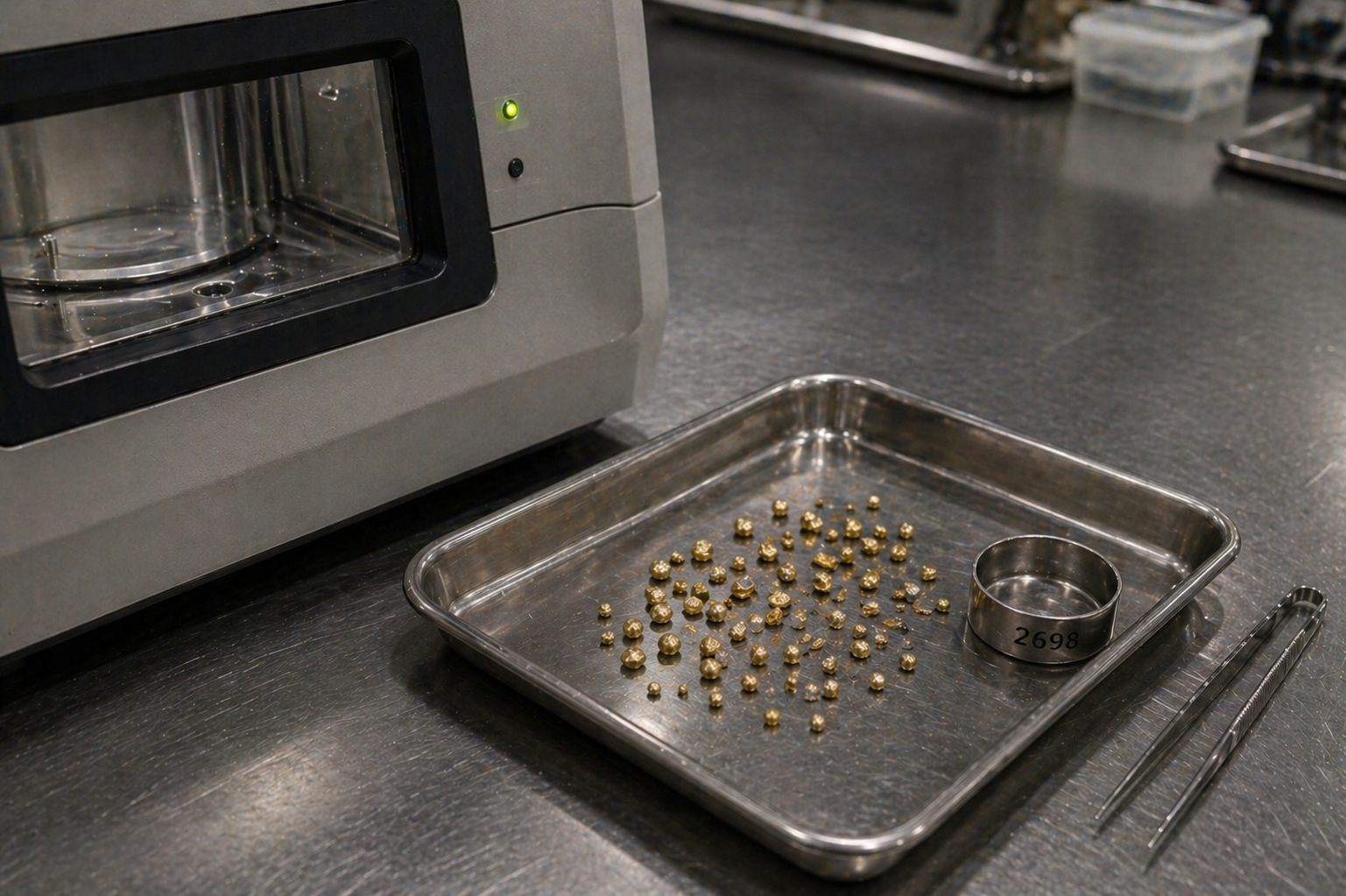
Refining is conducted at LBMA-accredited counterparties on an assay-exchange basis. Doré is melted, sampled, and assayed against an agreed return percentage; outturn is measured to the four-decimal fineness standard expected by LBMA Good Delivery refiners.
Where assay results are disputed, ExCom preserves the umpire option — an independent third-party assay, agreed in advance and binding on outturn. Disputes are uncommon; the option exists so the protocol is enforceable, not so it is exercised.
Refining counterparties are referenced by jurisdiction — Switzerland, Italy, the United Arab Emirates, India, and Türkiye — without naming counterparties on this surface. Concentration is managed against an internal cap on top-2 jurisdictional share.
Settlement
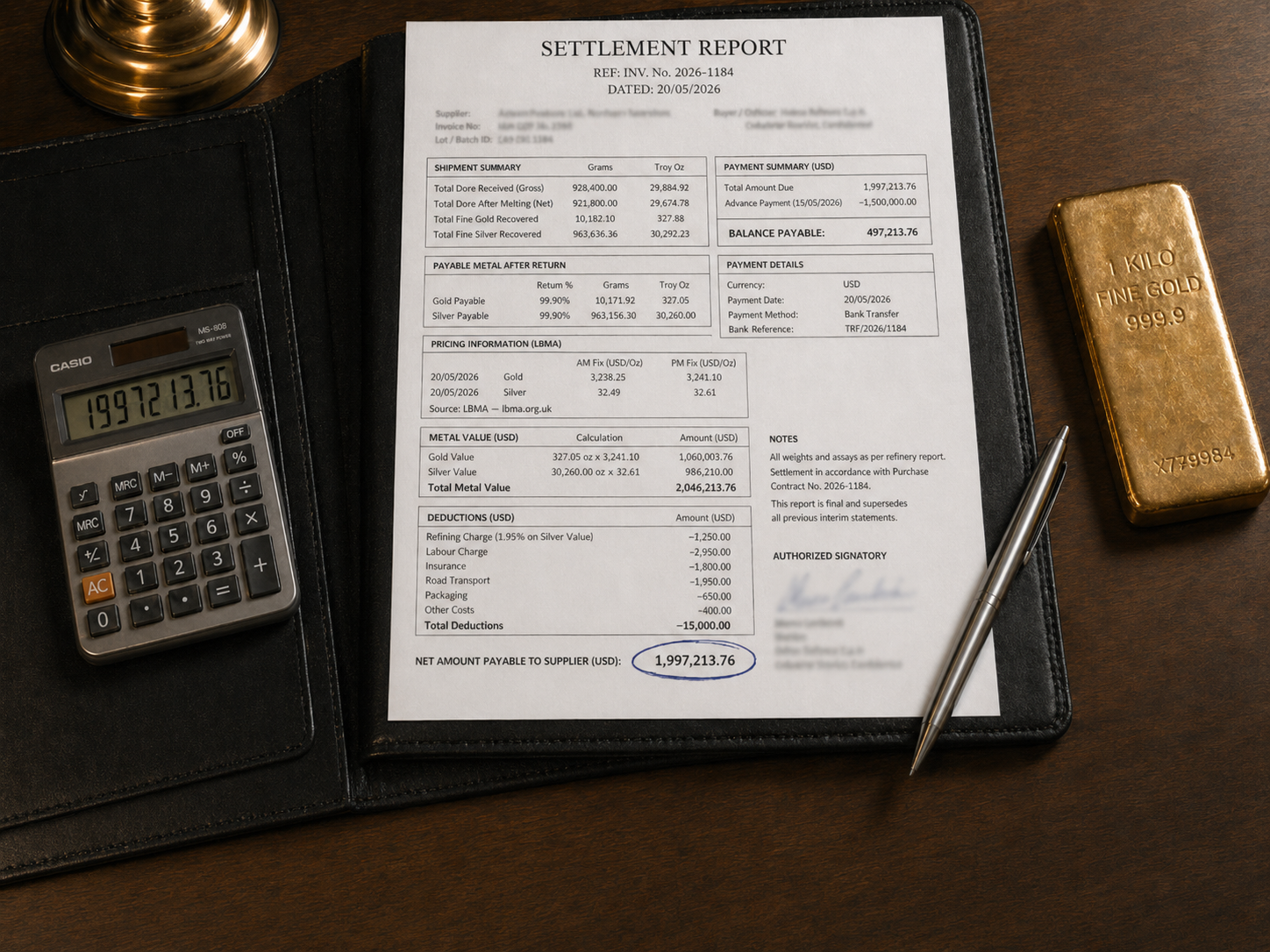
Settlement occurs against LBMA AM and PM fix benchmarks within a fourteen-day fix window measured from wheels-up. Pricing decisions are taken against the pre-agreed quotation period for each lot, with hedging unwound in parallel.
Settlement documentation is issued to producer, refining counterparty, insurer, and auditor on agreed timelines. The producer receives final pricing, return percentage, and settlement detail; the refining counterparty receives the assay-exchange outturn statement; ExCom retains the full ledger for audit.
P&L attribution is decomposed into metal spread, return differential, assay efficiency, and timing components. The decomposition is what allows the trading discipline to be reviewed line-by-line — by the audit committee, by the board, by counterparties under NDA.
The system the lifecycle runs on.
The four phases above are not stitched together by spreadsheets and email. They run on a single internal platform that ExCom built and operates — the ExCom Trading Platform. Origin diligence, lot tracking, transit, refinery handoff, pricing window, settlement, and the audit trail underneath all of it sit on the same operating substrate. Compliance is one chapter of that platform, not a function bolted onto the side.

Internal operating system
Counterparty files, lot ledger, transit and custody states, fix-window pricing, settlement, and full audit trail — one system, one substrate. Trading, capital, operations, and compliance work off the same record.
Counterparty bridge — dedicated portal
Producer counterparties and refinery customers connect through a dedicated portal to place orders, hedge price-window exposure, and view the live state of their lots. Both sides of the bridge — supply and demand — work the same surface ExCom does.
Direct execution, choice of venue
Counterparty hedging and price-risk orders are executed direct into the chosen venue — MetaTrader 4, MetaTrader 5, or cTrader — against the counterparty's chosen liquidity provider. Standing connectivity into IC Markets is integrated alongside other liquidity providers selectable per counterparty. Direct execution; no aggregation tier between intent and the book.
Platform access, onboarding, and venue setup are arranged through the trading desk under counterparty engagement.